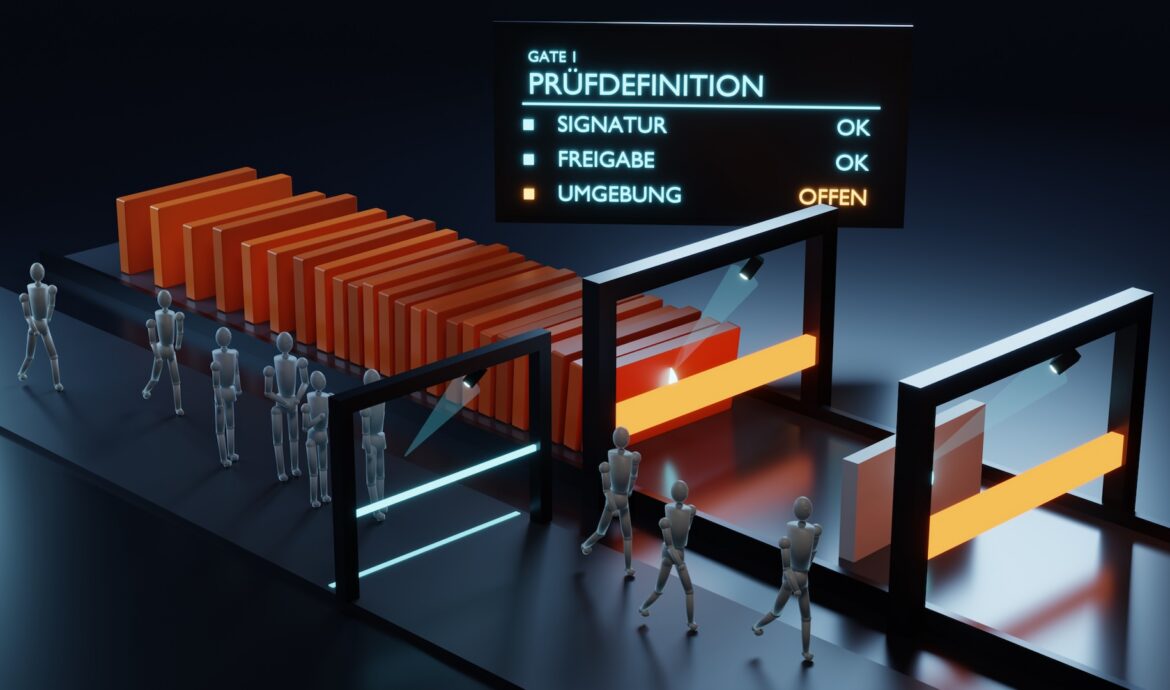
When Processes Bring Teams to a Standstill
Projects . Tech . ToolingThe concept is set, the architecture is clear, the code itself is unproblematic. It is therefore almost only about implementation. In earlier projects that would have been done in a few days. Programming, build, connecting the services, deploying to various environments — the team did it themselves. If something went wrong in a sandbox, they

Open-Weight LLMs: Making the Right Choice
AICloud models are convenient. They are also expensive, dependent on US providers, and often bound to rate limits. The debate has intensified in recent weeks. Frontier models with open weights now reach a quality that until recently was reserved for closed cloud APIs. On Oxide and Friends, Simon Willison speaks of an “Open Weight Revolution.”

Tailscale VPN: Connect Your Own Services on Your Own Infrastructure
AI . Network . Personal . Security . ToolingProxmox in the data center, a laptop in the home office, a Raspberry Pi at the edge of a field, and a DGX Spark for inference: your own hardware is rarely in one place. NAT, firewalls, and dynamic IPs separate the devices. Manual WireGuard means: exchanging keys, maintaining IPs, updating firewall rules. Tailscale builds on

Team Setups in Larger Projects: Delivering Across Team Boundaries
PersonalModern features no longer fit into a single team. That has become normal. An IoT device sends events. An MQTT service forwards them. A mobile app displays them. Add deployment on AWS, a database schema, push notifications, UX for edge cases, IT security for authentication and privacy, and operations for three environments. That is five
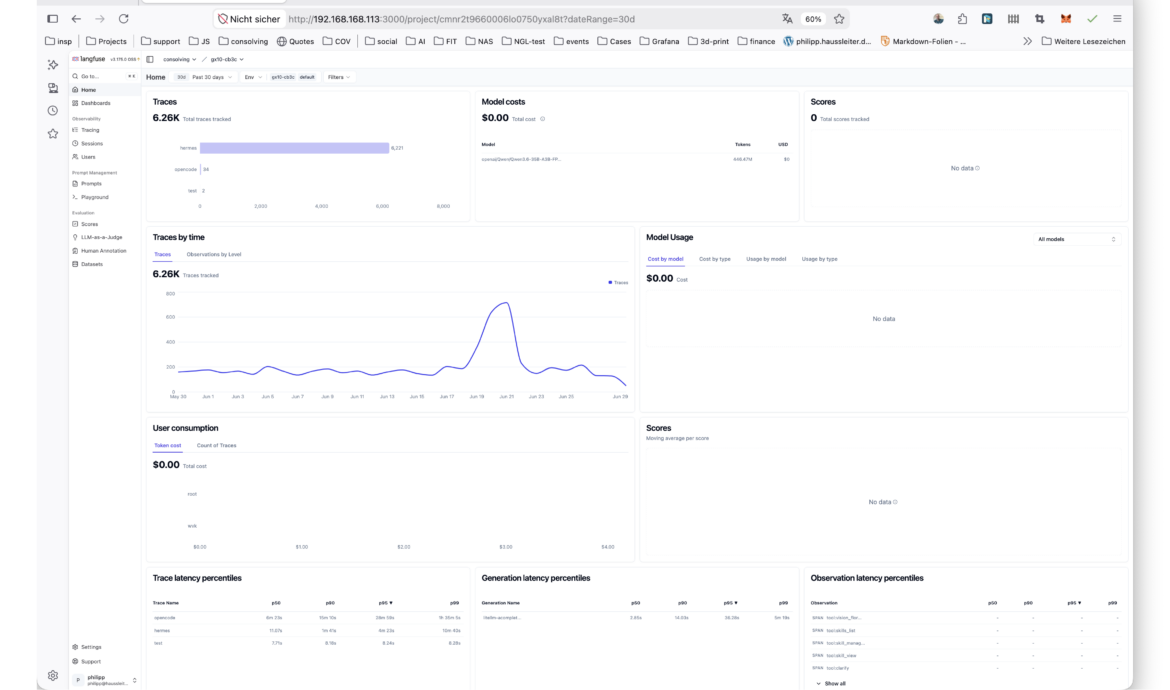
Token Governance for LLMs: Why Shared Budgets Fail (and How to Do It Better)
AI . PersonalYour team shares a GitHub Enterprise account. Copilot is enabled for everyone. A shared budget, no individual limits, no visibility into who consumes what: “it’s in the budget.” Then, in mid-June 2026, GitHub switches its billing from Premium Request Units to token-based billing. Suddenly the budget is no longer “unlimited”. The error message arrives faster

“The world of cyberpunk was meant as a warning, not as an instruction manual.”
Security“The world of cyberpunk was meant as a warning, not as an instruction manual.” Palantir published a 22-point manifesto on X. Title: “The Technological Republic”. Not a product launch. Not a whitepaper. A political program. In it, a private technology company formulates a leadership claim that deeply interferes with the foundations of our free democratic

Running gokrazy on a Banana Pi BPI-R1
CLI . Go . Hacking . TestingMotivation I had a BPI-R1 sitting in a drawer. The board is from 2014 — only ancient OpenWrt and outdated Armbian images exist for it. Nobody maintains this platform anymore. The hardware is fine though: dual-core Allwinner A20, 1GB RAM, SATA, and a BCM53125 5-port Gigabit switch on the board. Not bad for a dedicated

T-shaped Skillsets – why the most valuable people don’t fit into a box
PersonalI never wanted to lock myself into just one area. Not because depth doesn’t matter to me – but because I’ve always been interested in topics beyond my core field. A while ago, I came across the term T-shaped. And I immediately felt: that describes it exactly. Most job postings still read like shopping lists: five

Those Who Ask Questions Drive Quality
PersonalI work with a colleague who finds something in almost every code review or text proofread. Almost every time. At first, that was exhausting – not because the remarks were wrong, but because they cost time. Time I hadn’t planned for. In hindsight, that was exactly the point. Many of the detailed improvements turned out

Democracy Requires Attention – Which We’ve Long Since Sold.
Personal8 seconds. That’s supposedly the average human attention span today – shorter than that of a goldfish. The number is largely made up. That the attention span has noticeably decreased, less so. This has direct consequences for democracy. Democracy is not a passive state – it requires that people weigh complex issues, evaluate sources, tolerate contradicting